
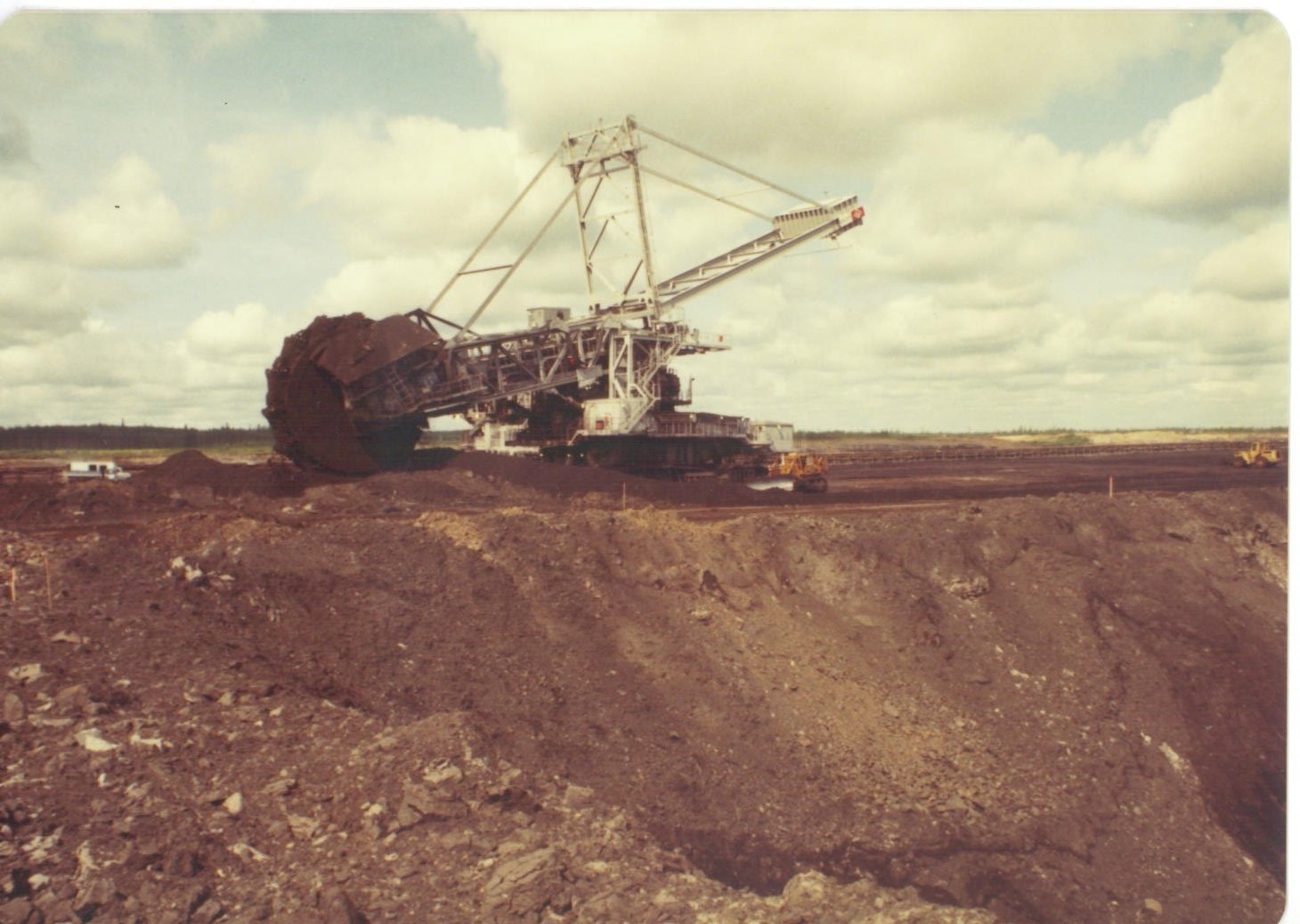
There are machines, and then there are things that make you reconsider the word. A walking dragline is the latter. These photographs were taken at the Athabasca oil sands near Fort McMurray, Alberta, around 1980 — during the early years of large-scale surface mining that would eventually make the region one of the most consequential industrial landscapes on earth.
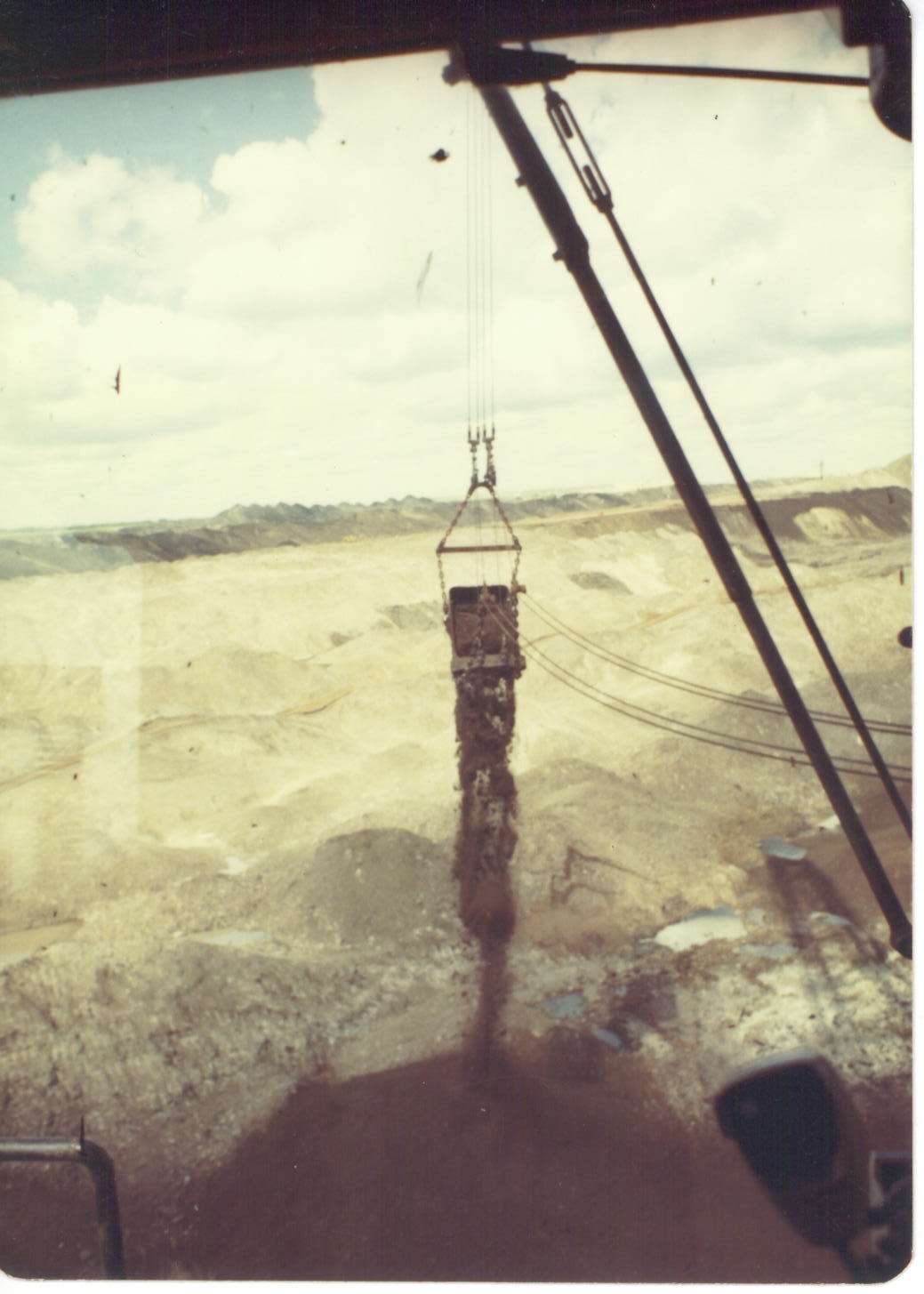
The machine in these photographs is a Marion 8050, one of the largest walking draglines ever put to work in Canada. Its job was stripping overburden — the glacial till, clay, and muskeg sitting above the oil-saturated sand — and casting it to the side so the underlying bitumen could be mined. The bucket, suspended from a latticed boom by drag and hoist cables, was dragged back across the ground like a claw, then swung in a wide arc and dumped.
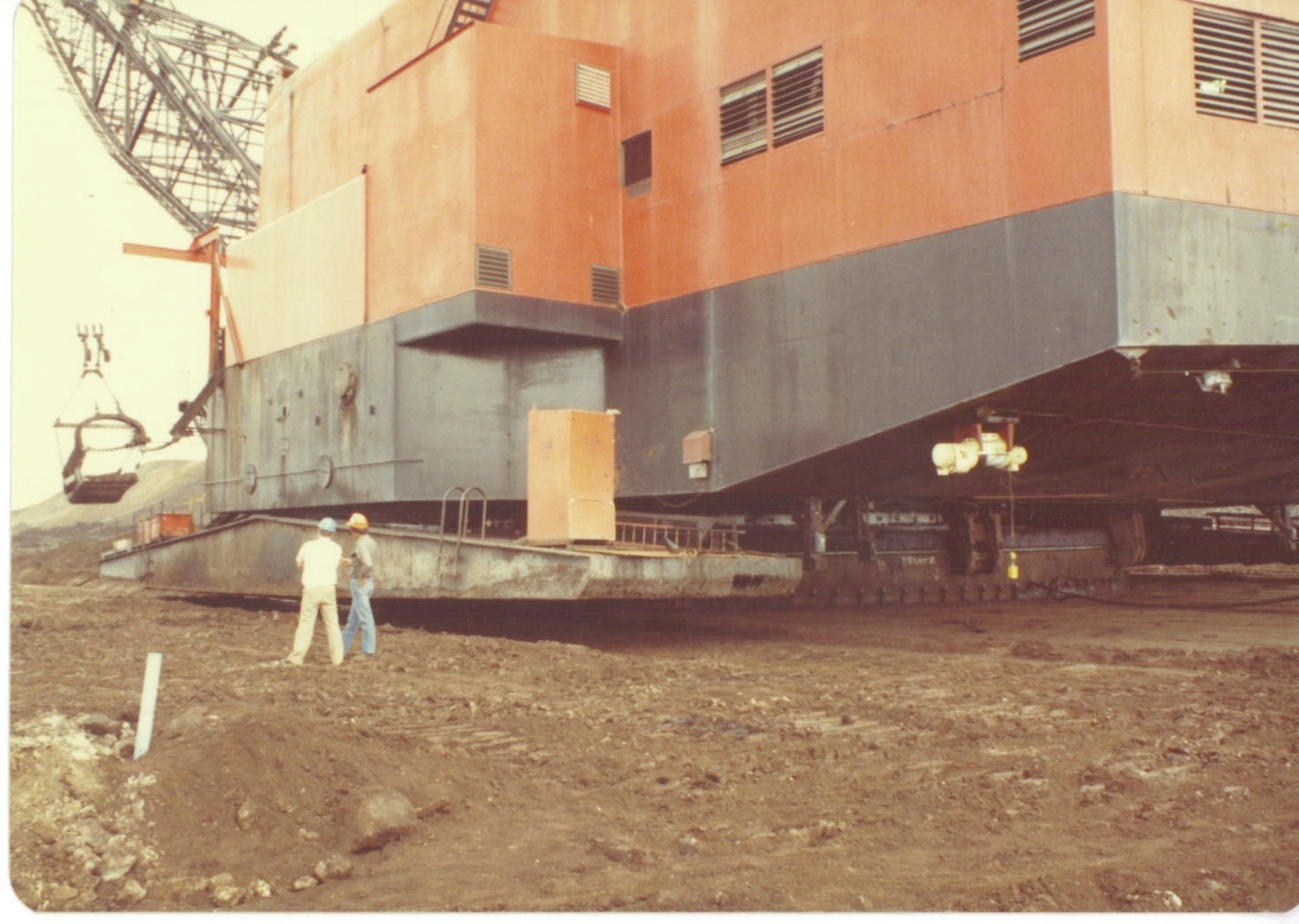
Scale is the thing that photographs cannot quite prepare you for. The machine's body — the rotating housing containing the electrical machinery, motors, and operator's cab — was as tall as a four-storey building. The drag chain alone, coiled on the ground before deployment, was composed of links the size of a man's torso. Walking from one end of the machine to the other took several minutes.
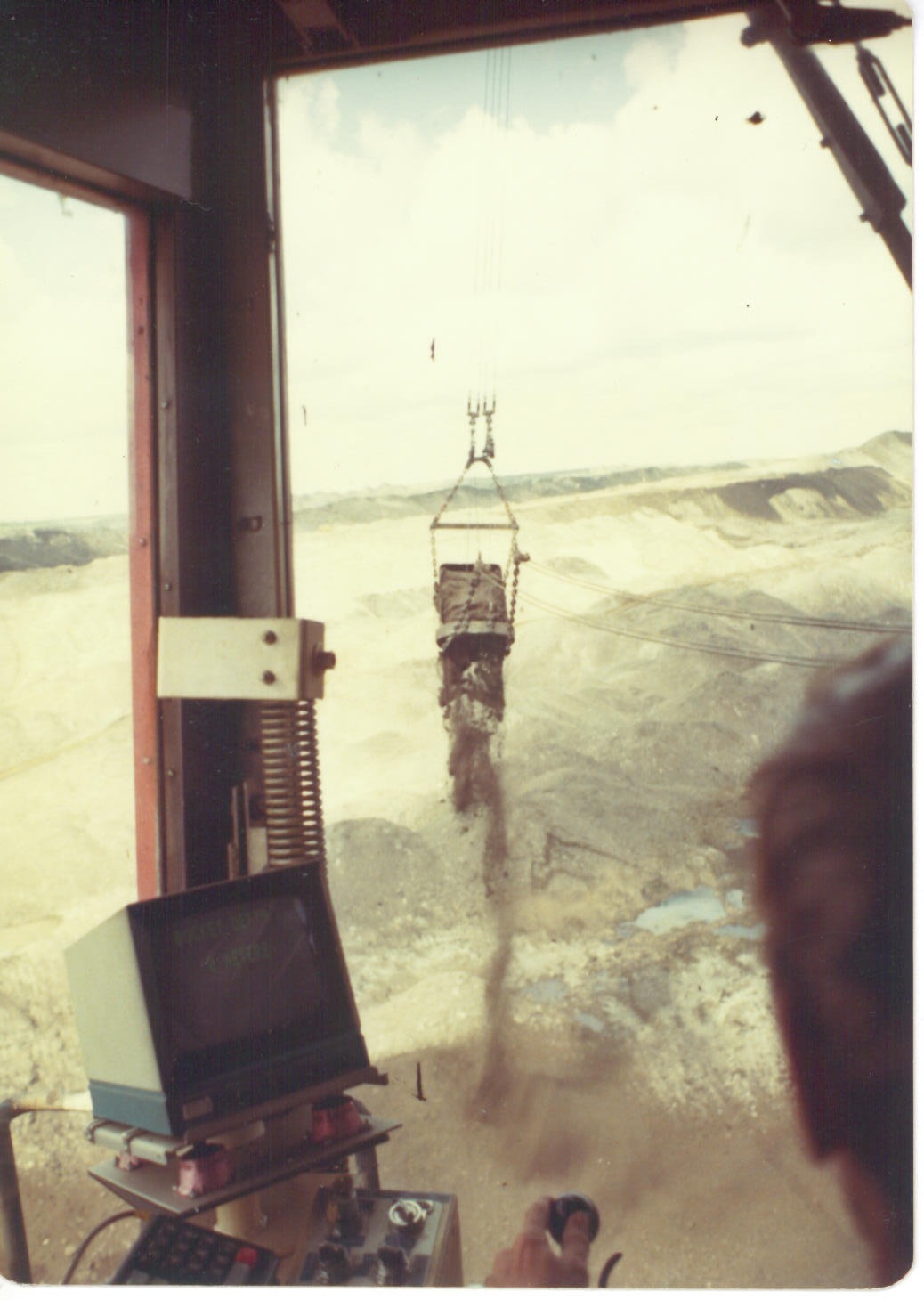
The operator sat alone in a cab perched at the top of the housing, surrounded by levers and foot pedals controlling the dig, drag, hoist, and swing motions — four separate cable drums, each independently powered. Reaching full production rhythm meant orchestrating all four in a continuous cycle: cast out, drag back, hoist, swing, dump, return. An experienced operator could do this almost without thinking. The view from that cab, looking out across the open pit with the loaded bucket swinging below, is captured in several of these photographs.
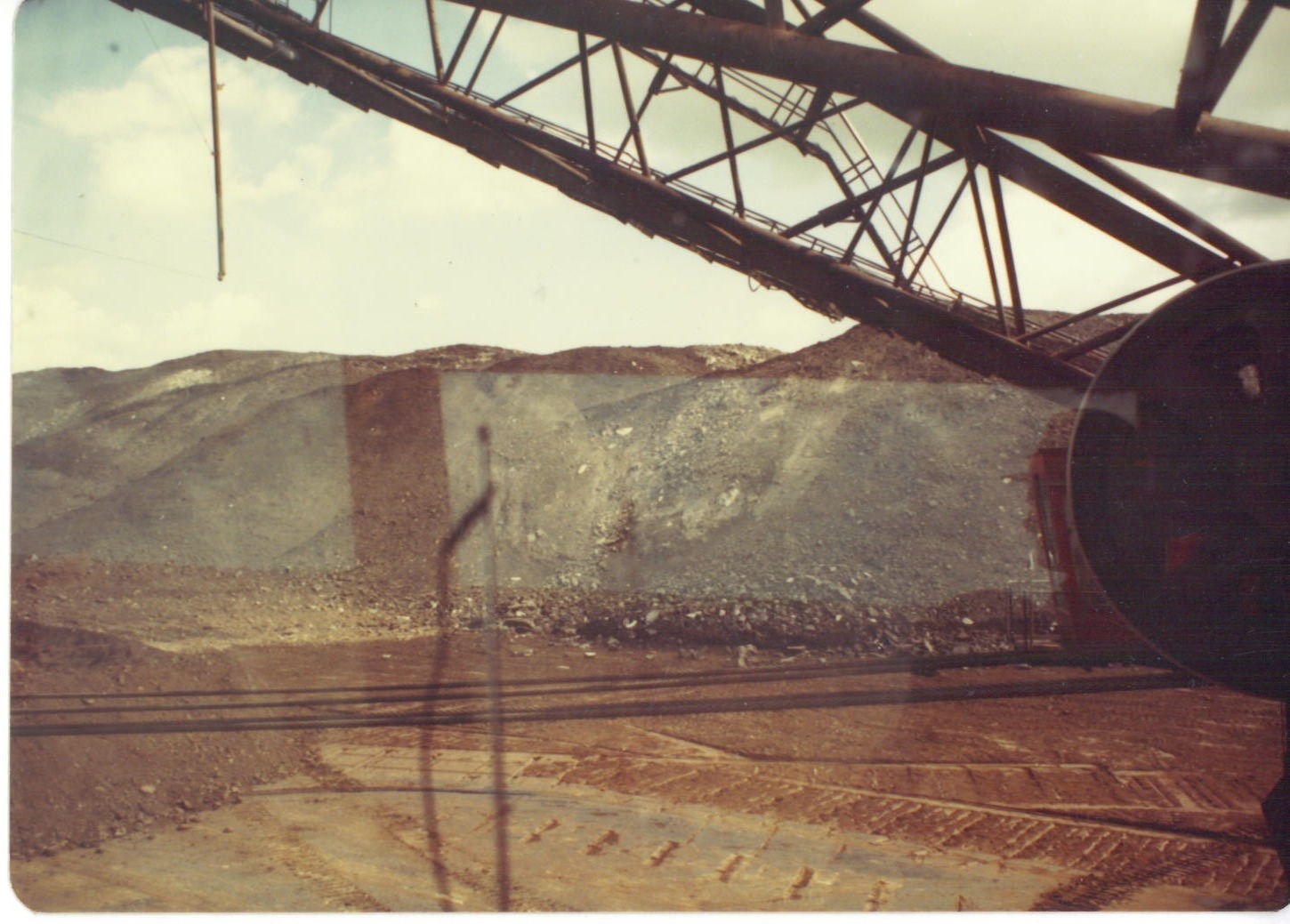
The pit walls told a geological story. Looking at the exposed face — visible in one of these photographs from the boom vantage point — you could read the sequence plainly: a layer of muskeg and organic material at the top, then grey glacial till, then the transition zone where the sand began to darken with oil, then the productive bituminous sand itself, stained almost black. The Athabasca deposit is shallow enough to mine by this method because an ice sheet once overrode it and scoured away most of the cap rock. That same ice sheet left the thick till that the dragline was now removing.
The economics of the oil sands in 1980 were marginal at best. Conventional oil was still cheap enough that the energy required to mine, extract, and upgrade bitumen to synthetic crude barely pencilled out. The draglines and bucket-wheel reclaimers were running continuously — 24 hours, through northern Alberta winters — not because it was easy, but because the infrastructure had been built and the oil was there. The operations at Suncor (then Great Canadian Oil Sands) and Syncrude were among the most expensive hydrocarbon extraction projects in the world at the time.
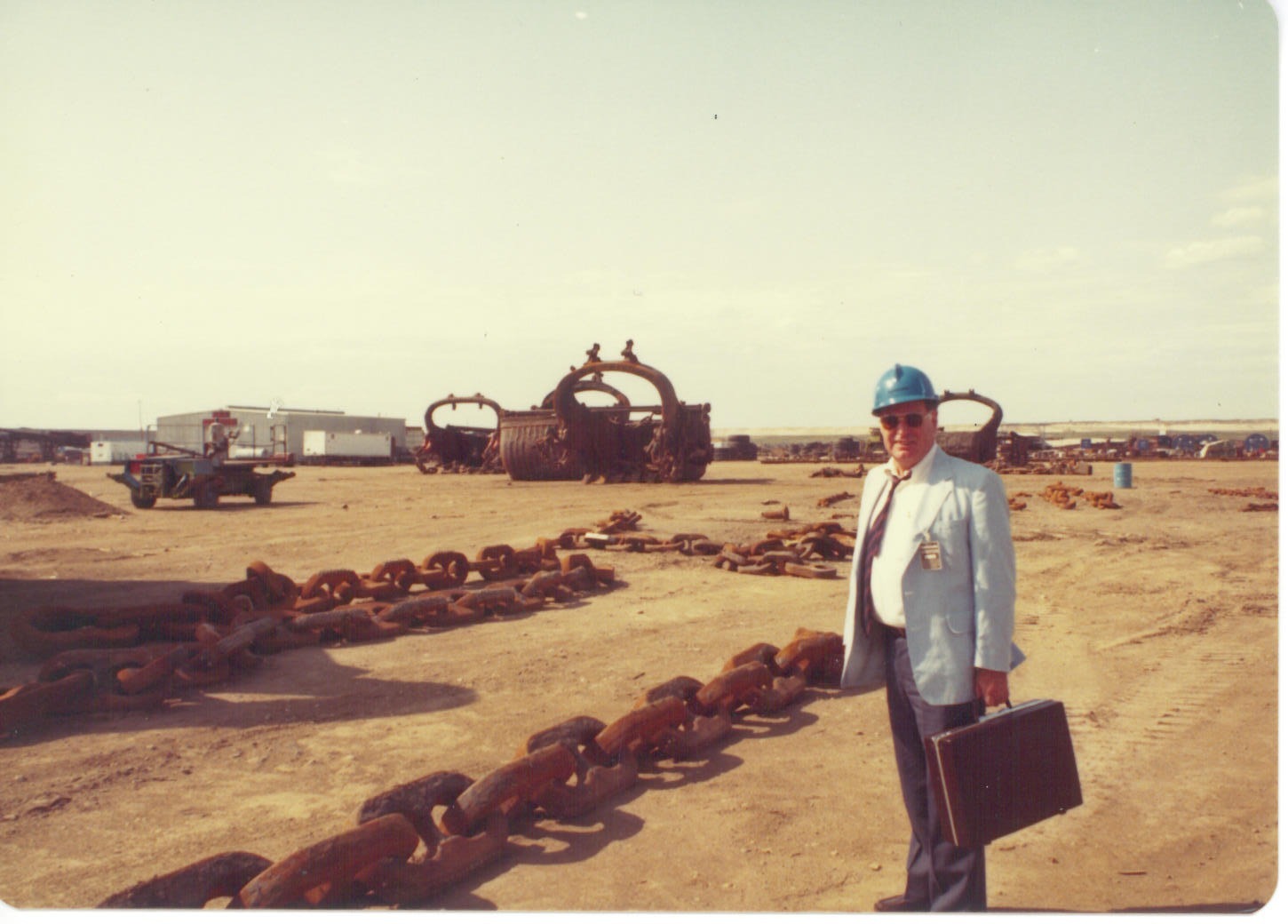
These photographs were taken on a site visit, not from the operator's seat. The dragline was still working when these were shot — you can see, in the cab-view photographs, that the bucket is loaded and moving. The visit was part of a broader survey of heavy lifting and rigging hardware in use at the oil sands operations, looking at how chains, shackles, wire rope, and rigging fittings were being specified and sourced for equipment of this scale. That is Bill Lloyd in the last photograph, standing beside a run of retired drag chain with two decommissioned buckets behind him. The chain links and bucket hardware give a sense of what that supply work involved: components where every load cycle was enormous, and where failure was not an option.
The Marion 8050 is no longer at Athabasca. The dragline era at the oil sands gave way to truck-and-shovel operations as the mines deepened and dispersed. But in 1980, at the edge of a cut that stretched to the horizon, one of these machines in full swing was as pure an expression of applied mechanical force as anything in Canadian industry.