
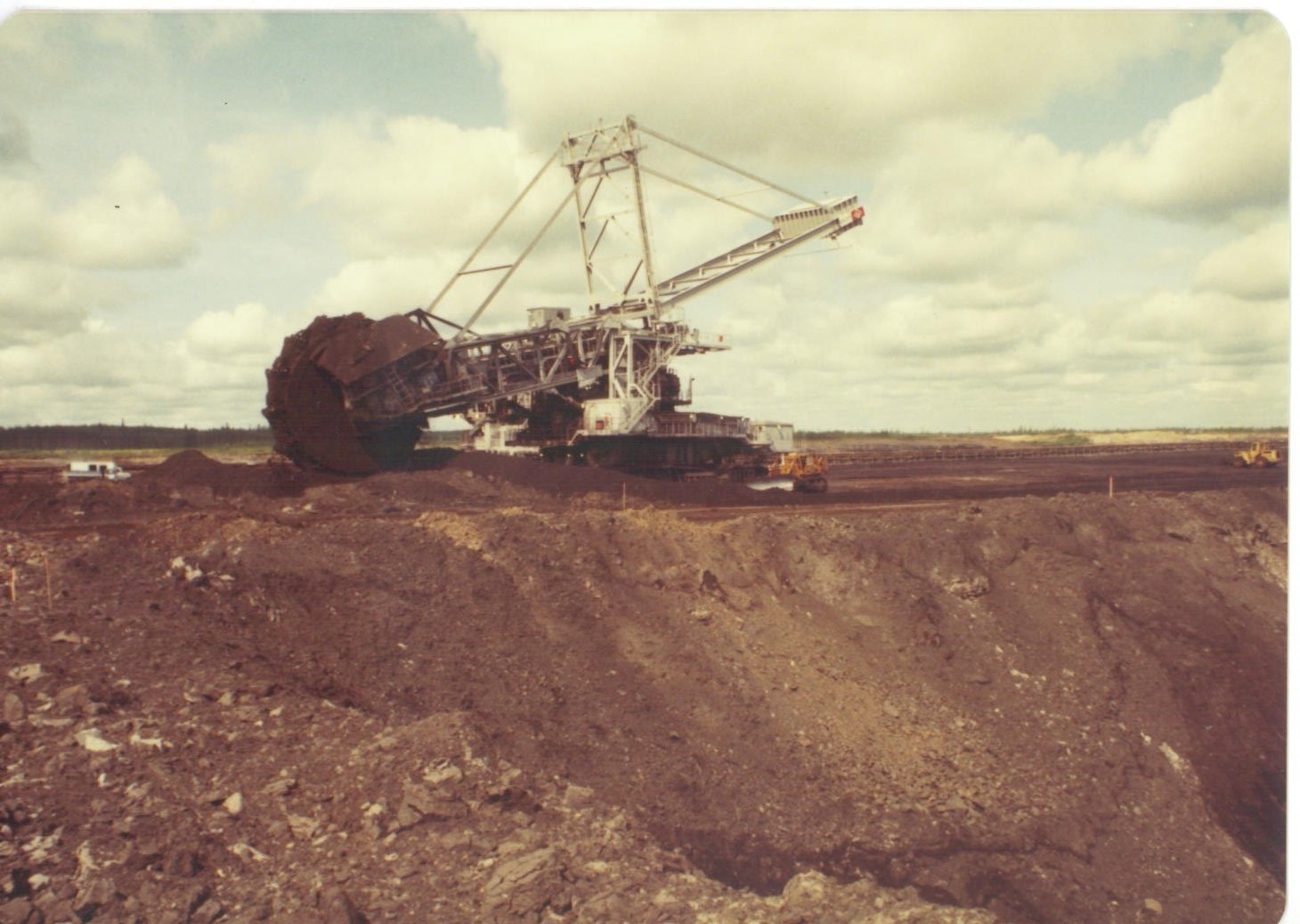
The machine doesn't have wheels. It doesn't have tracks. It walks — and once you've seen it, you don't forget it. A walking dragline moves on two large pontoon-like shoes, one on each side of the circular base, driven by an eccentric mechanism inside the housing. As the cam rotates, each shoe lifts, swings forward, touches down, and transfers the machine's weight. Then the other side goes. The whole cycle — one full "step" — takes roughly thirty to forty seconds. In a minute, the machine travels about three metres.
The video below, shot at a working mine and sped up eight times, makes the motion clear. What you're watching is a machine weighing thousands of tonnes moving itself across the ground without a single wheel or rolling element. The base plate — the large circular tub the machine sits on — slides along the ground surface as the shoes push it forward. Then the shoes lift again, reset, and repeat.
The reason for the walking system is weight distribution. A machine this size would destroy conventional crawler tracks — and more importantly, it would sink into the soft overburden and muskeg common at oil sands and coal mine sites. The shoes spread the load across a much larger footprint than tracks could manage. When digging, the shoes are retracted and the full weight rests on the circular tub, which acts like a giant bearing ring, allowing the entire upper structure to rotate freely for the swing cycle.
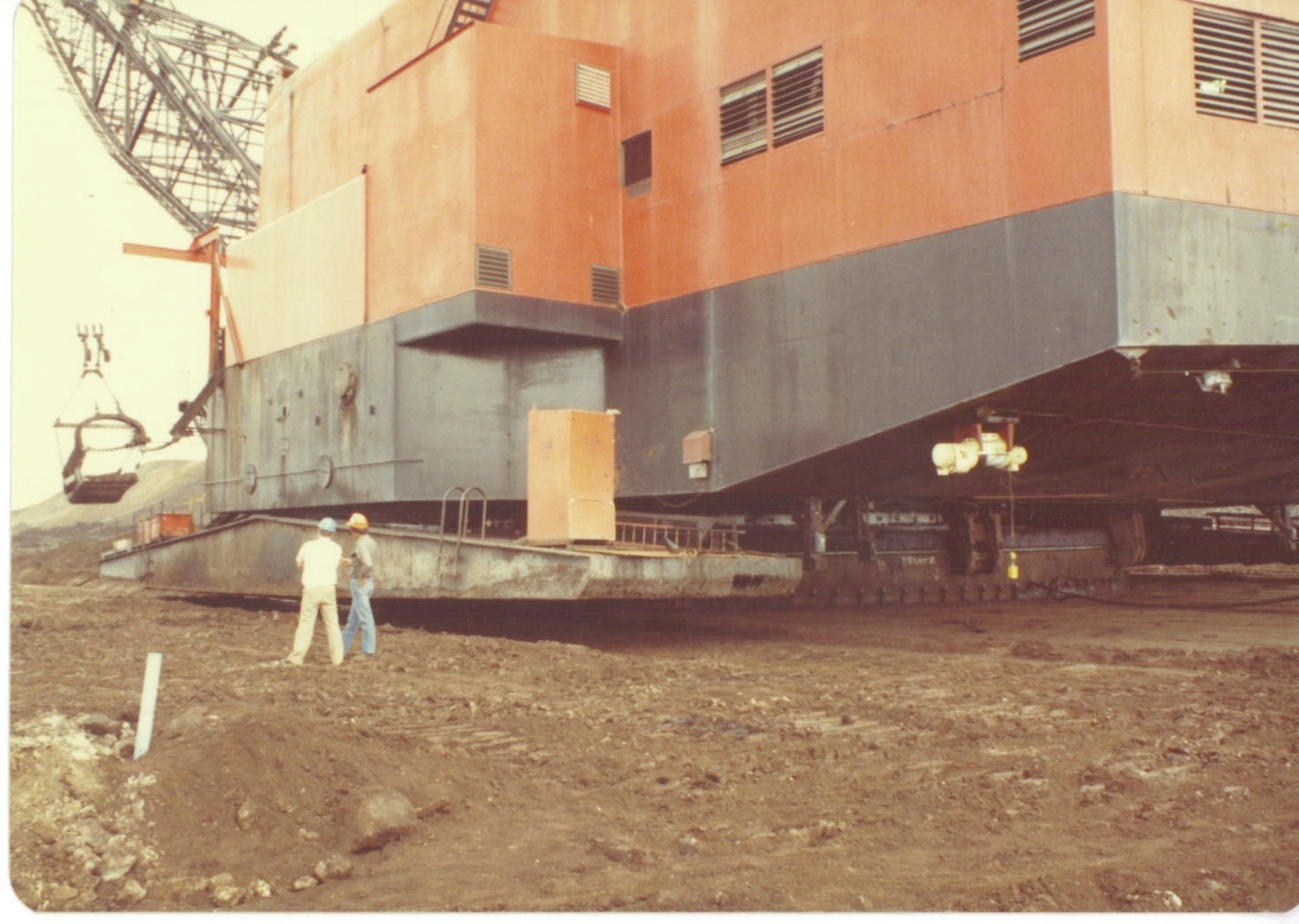
The walking mechanism was patented in the 1920s and refined through the 1930s. Marion Power Shovel — the manufacturer of the machine at Athabasca — shipped its first walking dragline in 1939. By 1980, the design had been scaled to sizes the original engineers could not have imagined: booms over 100 metres long, buckets the size of a two-car garage, machines that required their own electrical substations just to run. But the walking principle was the same one worked out on paper fifty years earlier.
It's a slow way to move. Three metres per minute is not a speed — it's a geological pace. But the dragline was never meant to travel. It was meant to stand in one place and swing, and swing, and swing, pulling overburden off the top of the oil sand until the geometry of the pit forced it to reposition. Then it walked — deliberately, massively, inevitably — and went back to work.